Table of contents
What makes the Tour of Flanders unique
The Tour of Flanders is one of the few races where having the best isolated number does not guarantee victory. It is not enough to have the best FTP, the best VO2max or the highest power peak. This race is decided when riders already have more than 230–260 km in their legs, after multiple maximal efforts and with a level of fatigue that does not always fully appear in the data.
This is not won by the strongest rider in absolute terms. It is won by the rider who can keep performing when everyone else starts to fade. As in all Monuments, fatigue resistance is not an extra: it is the factor that creates the biggest differences in final performance.
But understanding Flanders only through physiology is not enough. This race is part of Belgian identity and, especially, of Flemish culture, where cycling is deeply rooted. It is not just a sporting event: it is a tradition. The climbs, the narrow roads, the crowds and the accumulated brutality are all part of a history that helped define modern cycling. That explains why the route profile — flat roads with explosive climbs — is not accidental, but a historical evolution of the territory and of how racing developed there over decades.
The profile of the Tour of Flanders is also deceptive: much of the route is almost flat, but the race is decided by a succession of climbs, most of them on cobbles. It is not a race of one long continuous climb, but an accumulation of explosive efforts separated by fast sections where aerodynamic and tactical stress also matter.
Which abilities decide the race
The key range in Flanders sits between 1 and 5 minutes. That is where groups break apart and differences are made, not in long and steady efforts like in a Grand Tour.
Looking at the main climbs from a performance perspective, this is easier to understand in table format:
| Climb | Duration / Type of effort | Impact on the race (2026) |
|---|---|---|
| Oude Kwaremont | 2:49 – 3:08 / Progressive and cumulative | The most decisive sector. It is climbed 3 times, creating massive progressive fatigue that drains energy stores. As the penultimate climb of the race, it is often one of the most important points for breaking the decisive group before the final move. |
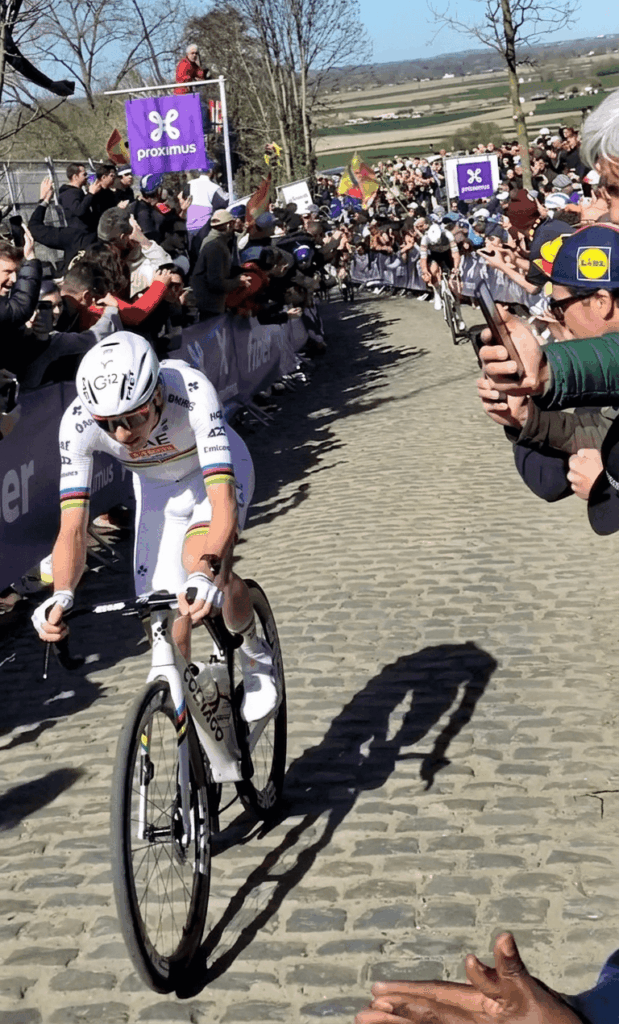
| Koppenberg | ~1:38 / Technical and extreme-force effort | Extreme gradient with limited traction. It creates gaps of around 5–10% because riders must apply force technically and without mistakes. |
| Taaienberg | 1:10 – 1:15 / Pure intensity | A true selection point based on actual ability. It is a “clean” effort that measures anaerobic power without the chaos factor of other climbs. |
| Paterberg | 44 – 55 seconds / Extreme explosive effort | The last climb of the race (ridden twice). Maximum torque effort; if a rider does not crest with the front group, their winning chances are effectively gone. |
| Muur van Geraardsbergen | 2:10 – 2:20 / Historic | Reduced tactical relevance in the current route. Its distance from the finish and lack of hard chained climbs afterwards limit its ability to decide the race definitively. |
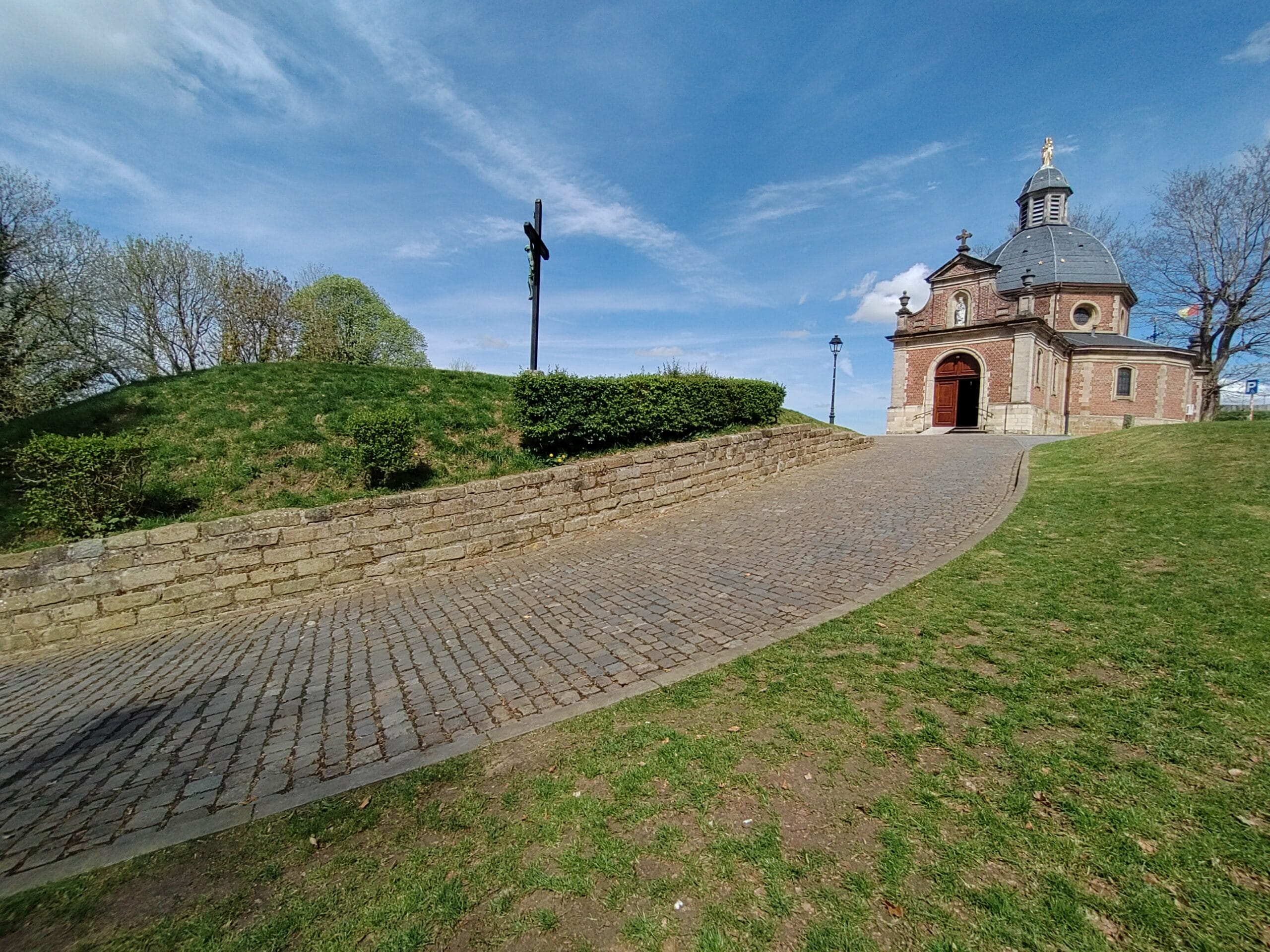
Beyond the table, the key idea is that each climb represents a different type of demand, and that the race is not decided by one isolated effort, but by the ability to respond well to all of them within a context of accumulated fatigue and tactical stress.
As a useful reference to contextualise the effort demands, Velo/Outside’s analysis of the 2025 edition reports a 2:49 Oude Kwaremont for Pogačar on the second passage, a 1:38 Koppenberg and a final Kwaremont in 3:08. See the Velo/Outside analysis
Fatigue resistance: the decisive factor
Flanders is a race of repeated high-intensity efforts: getting into position, climbing the walls, responding to attacks and accelerating again. This happens constantly for more than 5 hours, with very few moments of true recovery.
The key is not the fresh level, but how much performance is lost after 4–5 hours. Many riders lose 5–10% in 1–5 minute efforts after 200+ km, while the best riders limit that drop. That apparently small difference is what decides the race.
This loss is not only metabolic, but also neuromuscular and technical. The ability to keep applying force efficiently when the body is already fatigued is one of the most decisive factors.
The Oude Kwaremont in 2025 is a very good example of this. Pogačar went from 2:49 on the second ascent to 3:08 on the third, yet he still went from cresting with the favourites to riding away alone. The key was not his best absolute value, but the fact that he was the rider who declined the least under fatigue.
That reflects durability perfectly: the winner is not the rider who maintains the best absolute value, but the one who loses less performance than the others when fatigue is maximal.
Technique and cobbles
Flanders is not a pure road race. Cobbles force riders to adapt their technique completely and change the way force is applied.
Riders need to let the bike move underneath them, avoiding excessive upper-body stiffness. A more relaxed grip on the handlebars helps absorb vibrations and maintain control.
On the climbs, the priority is not just producing power, but maintaining traction. That means staying seated more often, applying force progressively and avoiding abrupt peaks that can cause losses of grip.
Cadence also tends to drop while torque rises, making the effort feel closer to force application in imperfect conditions than to a normal climb. This favours riders with high specific strength and solid technique.
Vibration fatigue and equipment
Cobbles create a constant mechanical load that forces the body to stabilise continuously, increasing energy cost and neuromuscular fatigue.
This fatigue is not only local, but global. It affects the arms, core and stabilising muscles, generating constant micro-contractions that increase energy expenditure without showing directly in the wattage data.
In practice, this means arriving at the decisive moments with more accumulated fatigue than the numbers suggest.
Equipment matters. Wider tyres and lower pressures improve traction and reduce energy loss. The less the wheel bounces, the more efficient the movement and the lower the accumulated fatigue.
A simple metaphor explains it well: a tyre with too much pressure on cobbles behaves like an overinflated ball bouncing over uneven ground. Instead of moving efficiently, it loses energy with every bounce. Lower pressure helps the tyre “copy” the surface better, maintain more contact with the ground and turn more energy into forward motion instead of vibration.
When it rains: technique makes the difference
In the rain, the smooth cobbled surface loses traction and the margin for error becomes minimal. Force application must be more progressive and every mistake is punished much more severely.
On narrow climbs, an error can mean putting a foot down and dropping out of contention. In that context, technique becomes a direct competitive advantage.
Positioning: an invisible cost
The fight for position is one of the most decisive and least visible factors in Flanders.
Every approach to a climb involves braking, accelerating and repeated line changes. This creates repeated power spikes that significantly increase energy cost.
On top of that, the stress of riding near the front for hours also has a physiological and cognitive impact.
A strong team can reduce this cost by placing its leader well before the key sectors, which can mean 5–15% less energy expenditure before the decisive points.
Nutrition and end-of-race performance
Nutrition is not just about avoiding the bonk, but about maintaining the ability to produce high-intensity efforts at the end of the race.
In an event lasting more than 6 hours, glycogen maintenance is key to sustaining repeated efforts above threshold.
If energy stores fall, the ability to repeat hard efforts drops, and performance in key moments like the Kwaremont and Paterberg becomes compromised.
In this context, nutrition stops being secondary and becomes a necessary condition for competing for victory.
The modern winning profile
The winner of the Tour of Flanders is one of the most complete profiles in professional cycling.
They combine a high aerobic level with strong 1–5 minute ability, high absolute power, cobbled technique and excellent fatigue resistance.
They also need to make the right tactical decisions under fatigue and maintain technical efficiency when the body is already near its limit. The winner is not the best in one parameter, but the most complete rider under fatigue.
If we look at recent winners, several clear profiles appear. The first is the classic rouleur or flandrien with a huge engine. Fabian Cancellara, Tom Boonen and Kasper Asgreen fit here. These riders have massive absolute power, strong durability and the ability to dominate long, demanding races. Cancellara and Boonen are the historical archetypes, with three wins each, while Asgreen is a modern version of the same profile.
The second is the classics specialist. Mathieu van der Poel, Peter Sagan and Alexander Kristoff fit this category. They can attack on the climbs, arrive solo or still finish off a reduced group. Van der Poel is the most complete modern example, with multiple victories and dominance in different race scenarios. Sagan and Kristoff reinforce the idea that the strongest rider on the final climb does not always win; sometimes the rider who finishes better does.
The third profile is the attacking classics rider or puncheur, represented by Philippe Gilbert and Alberto Bettiol. These riders win through tactical timing, attacking at the right moment and sustaining the effort to the line.
Finally, there is the explosive climber. Tadej Pogačar is the clearest example. He is not a traditional flandrien, but his overall level is so high that he can dominate the race anyway. This reinforces the idea that Flanders, like other Monuments, allows different profiles, even if classics specialists have historically dominated.
2026 favourites
Pogačar needs to harden the race from far out and turn it into progressive attrition.
Van der Poel is probably the most complete profile for this kind of terrain, with an ideal mix of power, technique and explosiveness.
Pedersen is very dangerous in open scenarios or reduced finishes thanks to his robustness and ability to maintain performance under fatigue.
Van Aert needs to optimise his earlier energy cost and play his tactical cards well, with strong options both in a final sprint and in an attack 2–3 km from the line.
Philipsen, Küng and Jorgenson are also riders who can perform well here and, specifically, Philipsen and Jorgenson can play an important tactical role through team dynamics, creating favourable scenarios for their leaders.
Tactics: choosing efforts well
In Flanders, the winner is not the rider who responds to every attack, but the one who chooses better when to spend.
Following every move creates an accumulated energy cost that can be paid back in the decisive moments. This is exactly what happened to Van der Poel in 2025 when he entered one of the key moments, the second passage of the Oude Kwaremont, poorly positioned and had to spend a bullet that cost him later.
The key is identifying which attacks are truly dangerous and which can be neutralised by other riders or teams.
When a rider has teammates in the front group, tactics become even more important, allowing them to play numerical superiority.
Stannard’s example at Omloop 2015 illustrates perfectly how poor tactical management can lose a race even in a numerically superior position. See Ian Stannard vs Quick-Step
Conclusion
The Tour of Flanders is not won by the strongest rider in absolute terms, but by the one who best combines physical ability, technique, tactics and fatigue management.
It is a race where the real difference is not the best isolated number, but who can sustain more performance when everyone else starts to fall away. In practical terms, it is about losing less, choosing efforts better and arriving at the key points with more useful capacity than the rivals.
If we had to summarise how the Tour of Flanders is won, it would be with a profile that combines strong anaerobic ability, high VO2max, exceptional fatigue resistance, precise tactical reading for selecting the key moments, a competitive short sprint and solid cobbled technique.
If you want to apply this approach to your own performance and structure your training with real race logic, you can do it with an individualised approach here: Cycling coach – personalised planning
Because, just like in Flanders, performance is not built on a single number, but on how well you can combine all the variables when it matters most.