
Lactate test · Barcelona
Lactate testing for cyclists in Barcelona
A cycling-specific physiological assessment using a lactate test, in Barcelona. Get your training zones and a practical interpretation you can apply straight to your training plan.
- €120
- 60–75 min
- Personalised report
- Barcelona
What a lactate test is and what it's for
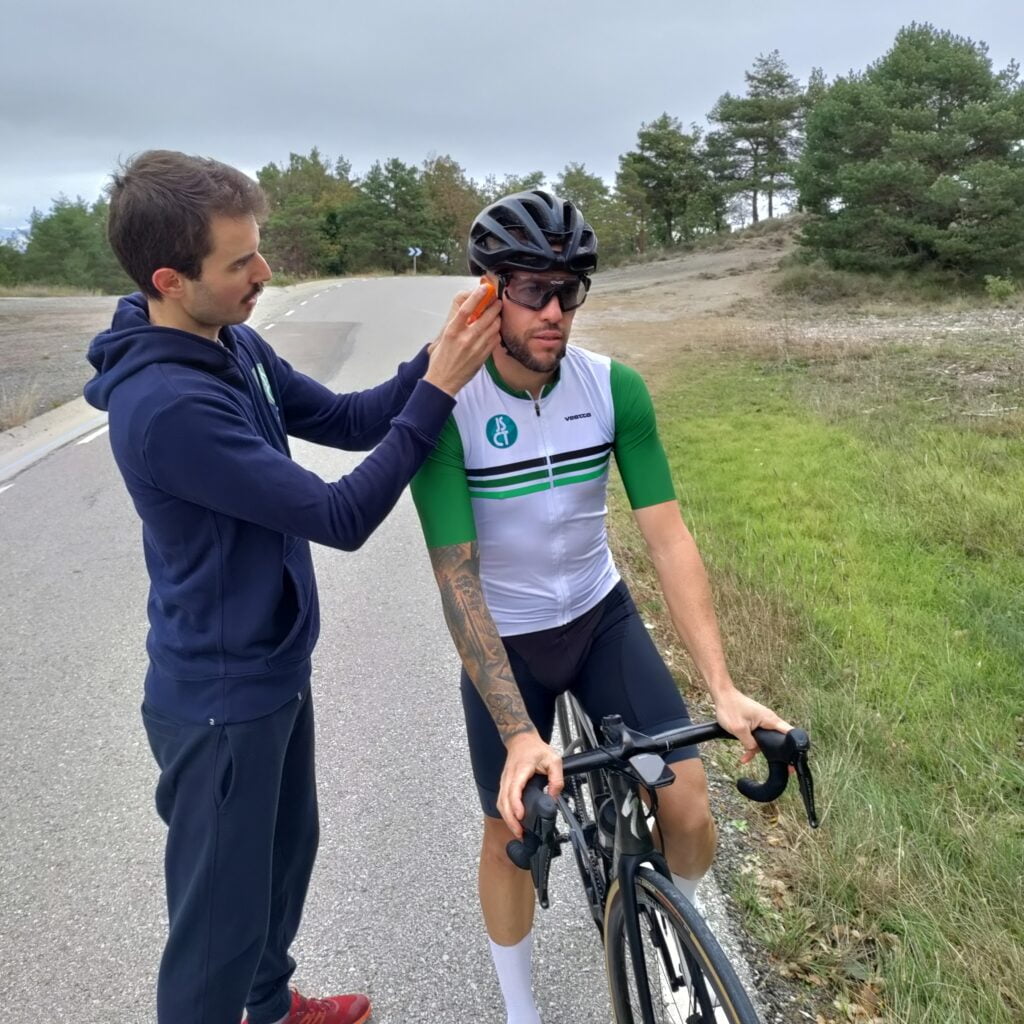
A lactate test shows how your body responds to different exercise intensities. During an incremental protocol, small blood samples are taken and lactate values are matched against power, heart rate and perceived exertion.
The goal isn’t a single number. It’s to understand how your physiological response changes as intensity rises, and to use that information to set your training zones more precisely and guide your training plan.
If you want to go deeper into what lactate is and how it’s interpreted, read our guide to lactate and cycling training
What you'll get
- Thresholds and training zonesAdjusted power and heart rate zones.
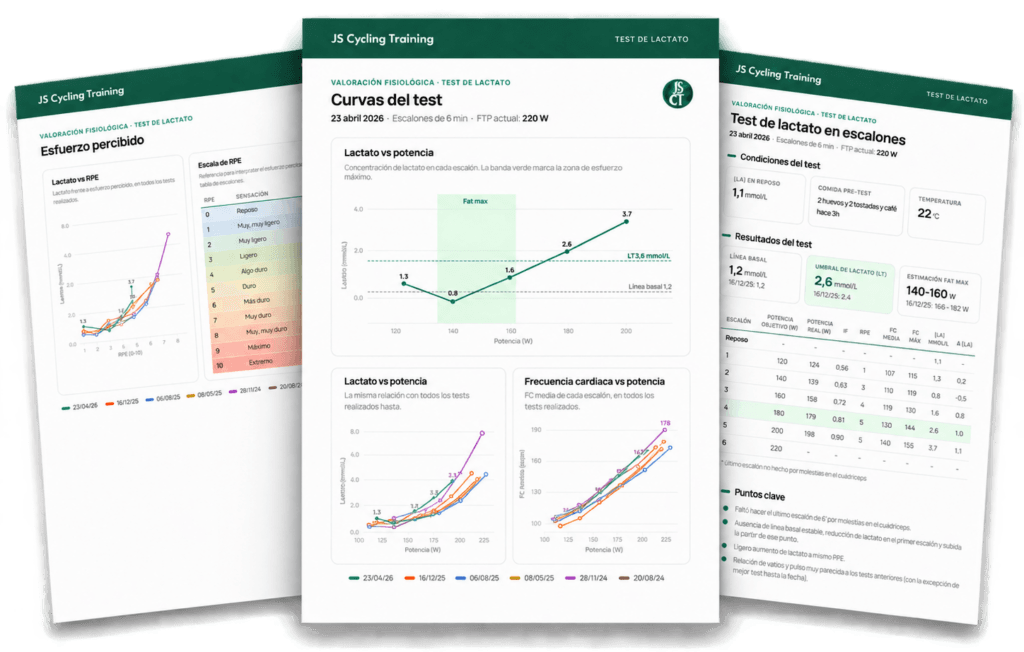
- Lactate–power curveHow lactate relates to power during the test.
- Comparison with previous testsTrack your progress if you've been tested before.
- Individual reportCharts, interpretation and how to apply it to your training.
How it works
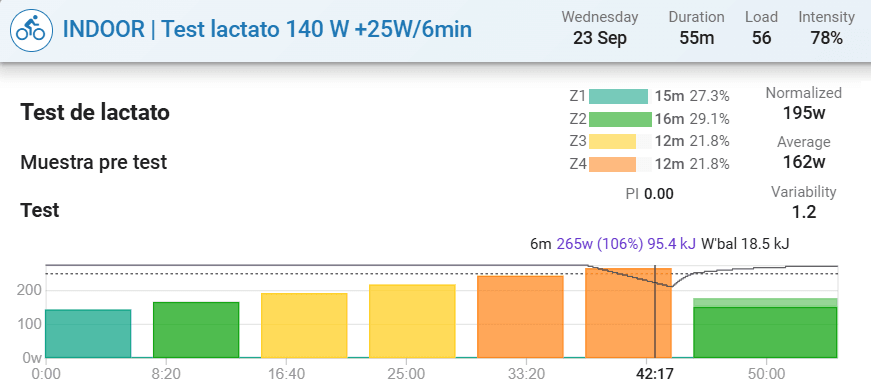
The test uses progressively harder steps on the bike. At each step, power, heart rate, perceived exertion and blood lactate are recorded. Starting loads and increments are adapted to each rider’s level to produce a curve that is wide and representative enough.
1
Baseline sample
lactate measured at rest or before the protocol starts.
2
Progressive steps
blocks of steady duration at increasing intensities.
3
Lactate measurement
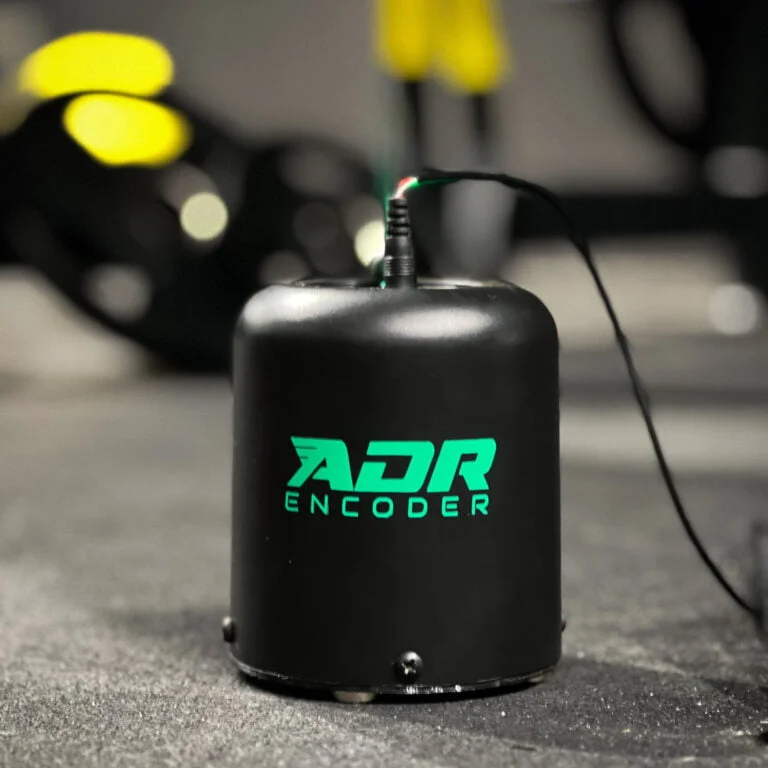
a small sample taken at the end of each step.
4
Analysis
combined interpretation of lactate, power, HR and perceived exertion.
Assessment by Jordi Sadurní
The test is carried out and interpreted by Jordi Sadurní, cycling coach and sports scientist, with a degree in Physical Activity and Sport Sciences (INEFC) and a master’s in High Performance in Cyclic Sports.
The assessment takes place in person in Barcelona and includes the test protocol, lactate measurements, analysis of power, heart rate and RPE, interpretation of the results and an individual report.
Before the test: to get representative results, avoid hard training the day before and try to arrive with similar nutrition, hydration and rest to what you'd use for other tests.
Want to test several times a year? The Premium plan includes 3 lactate tests a year. See the plans
Frequently asked questions
Yes. Lactate values are analysed together with power, heart rate and perceived exertion to individualise your zones and guide your training plan.
It depends on your goal and the point in the season. It can be useful to repeat it after a training block to see how your physiological response has changed. I recommend at least 12 weeks between tests.
No. It’s a physiological assessment focused on sports performance and does not replace a medical exercise test or medical assessment.
No. It’s useful for any cyclist who trains in a structured way and wants to individualise their intensities. That said, it makes most sense if you plan to track your progress with one or more lactate tests each year.
Other assessments in Barcelona
Book your lactate test in Barcelona
Get to know your physiological response and turn the results into zones and training decisions you can apply from day one.

Jordi Sadurní Serrallonga
Cycling coach · Licence 68416